%20-%20Made%20with%20PosterMyWall.jpg?width=500&height=500&name=TM%20JLE%205%20(1)%20-%20Made%20with%20PosterMyWall.jpg)
The Ultimate Guide to Academic Writing: Everything Students Need to Succeed

Let's be honest – academic writing can feel overwhelming. Whether you're a freshman tackling your first research paper or a graduate student working on your thesis, the pressure to produce clear, well-structured, and compelling academic work is real. But here's the thing: academic writing doesn't have to be a source of stress. With the right approach and tools, you can master this essential skill and actually feel confident about your writing.
Why Academic Writing Matters (And Why It's Different)
Academic writing isn't just about getting good grades – it's about learning to communicate complex ideas clearly and persuasively. This skill will serve you throughout your career, whether you're writing reports, proposals, or research findings.
What makes academic writing unique? It's formal, evidence-based, and follows specific conventions. Unlike casual writing, every claim needs to be supported with credible sources, and your arguments need to follow a logical structure that guides readers through your thinking process.

Finding Your Sweet Spot: Topic Selection and Research Questions
Start with what interests you. The best academic papers come from genuine curiosity. If you're assigned a broad topic like "environmental policy," narrow it down to something specific that you actually want to explore – maybe "how urban green spaces affect mental health in college students."
Your research question is your North Star. Instead of trying to cover everything about climate change, ask something specific: "How effective are carbon pricing policies in reducing industrial emissions in developing countries?" This focused approach makes your research manageable and your argument stronger.
Pro tip: If you're struggling to narrow down your topic or develop a strong research question, this is exactly where Dr. Joy's Writing Services can help. Sometimes you need an experienced eye to help you find that perfect balance between too broad and too narrow.
Building a Solid Foundation: Research and Sources
Here's where many students get stuck – finding and evaluating sources. You need credible, academic sources to support your arguments. Peer-reviewed journal articles, books from academic publishers, and reputable databases should be your go-to resources.
Quality over quantity is key. Five highly relevant, credible sources that directly support your argument are worth more than twenty tangentially related ones. As you research, take notes on how each source connects to your main argument – this will save you hours when you start writing.
Don't forget to keep track of your sources from the beginning. There's nothing worse than scrambling to find citation information the night before your paper is due.

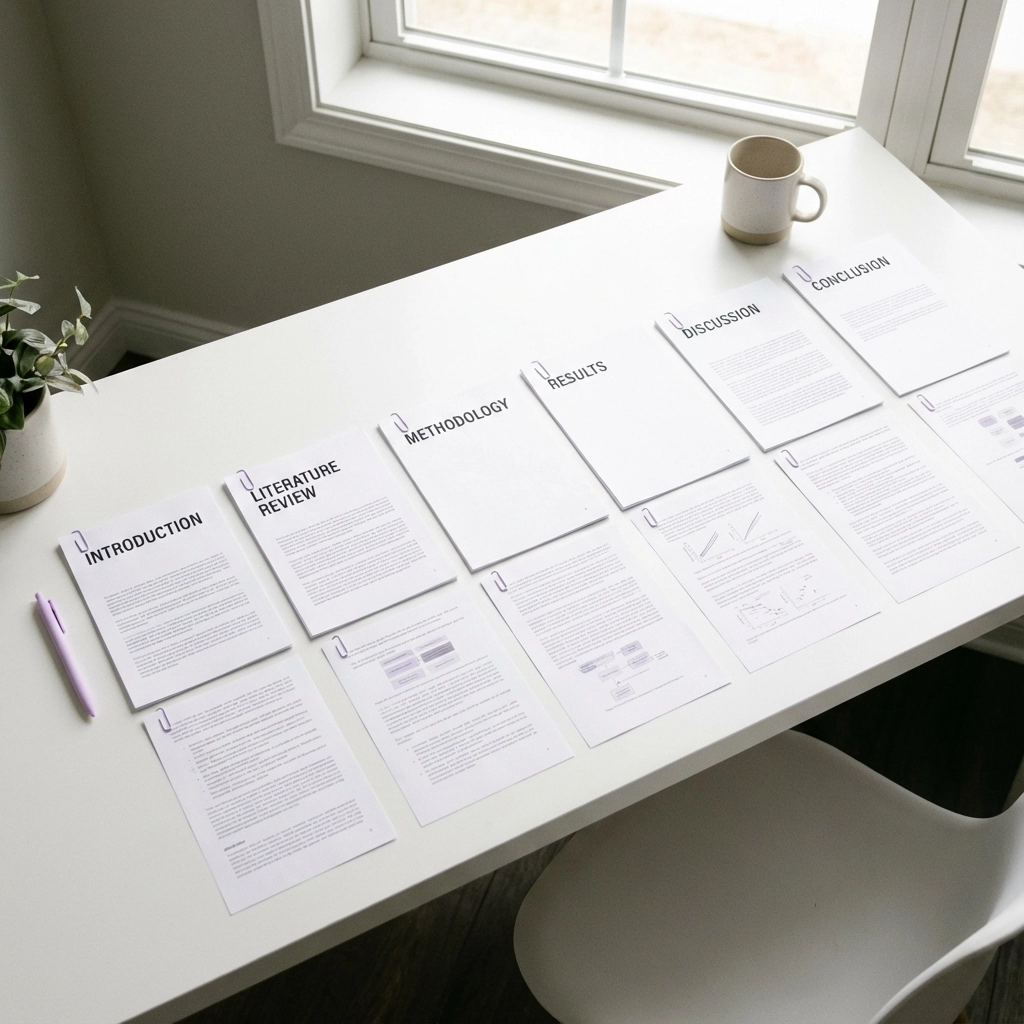
Structure: Your Paper's Backbone
Think of your paper's structure like a roadmap for your readers. They need to know where they're going and how they'll get there.
The Introduction: Hook, Line, and Thesis
Your introduction should do three things: provide context, present your research question, and deliver your thesis statement. For a typical paper, aim for about 10-15% of your total word count here.
Your thesis statement is arguably the most important sentence in your entire paper. It should clearly state your argument and give readers a preview of what's coming. A weak thesis like "Social media has effects on teenagers" won't cut it. Try something like "Social media platforms contribute to increased anxiety among teenagers by creating unrealistic social comparisons and disrupting sleep patterns."
The Body: Where the Magic Happens
This is where you present your evidence and build your case. Each paragraph should start with a clear topic sentence, followed by evidence, analysis, and examples. Don't just dump information – explain why it matters and how it supports your thesis.
Address counterarguments. Acknowledging opposing viewpoints and explaining why your argument is stronger shows critical thinking and makes your paper more persuasive.
The Conclusion: Bringing It Home
Your conclusion isn't just a summary – it's your chance to emphasize why your argument matters. What are the broader implications? What questions does your research raise for future study?
Writing Style: Finding Your Academic Voice
Academic writing has its own rhythm and conventions, but that doesn't mean it has to be boring or overly complicated.
Use active voice whenever possible. Instead of "The experiment was conducted by researchers," write "Researchers conducted the experiment." It's clearer and more engaging.
Vary your sentence structure. Mix short, punchy sentences with longer, more complex ones. This keeps your readers engaged and prevents your writing from feeling monotonous.
Be concise. Every word should earn its place. If you can say something in five words instead of ten, do it. Your readers will thank you.
Define technical terms. Don't assume your readers know every specialized term you use. A brief, clear definition shows consideration for your audience.
Common Pitfalls (And How to Avoid Them)
Over-quoting: Your voice should dominate your paper. Use direct quotes sparingly – usually only when the exact wording is crucial to your argument.
Weak transitions: Your paragraphs should flow logically from one to the next. Use transitional phrases to guide your readers through your argument.
Ignoring formatting requirements: Whether it's MLA, APA, or Chicago style, formatting matters. Professors notice when you don't follow guidelines, and it can hurt your grade.
Last-minute writing: Academic writing takes time. Start early, write multiple drafts, and give yourself space to revise.
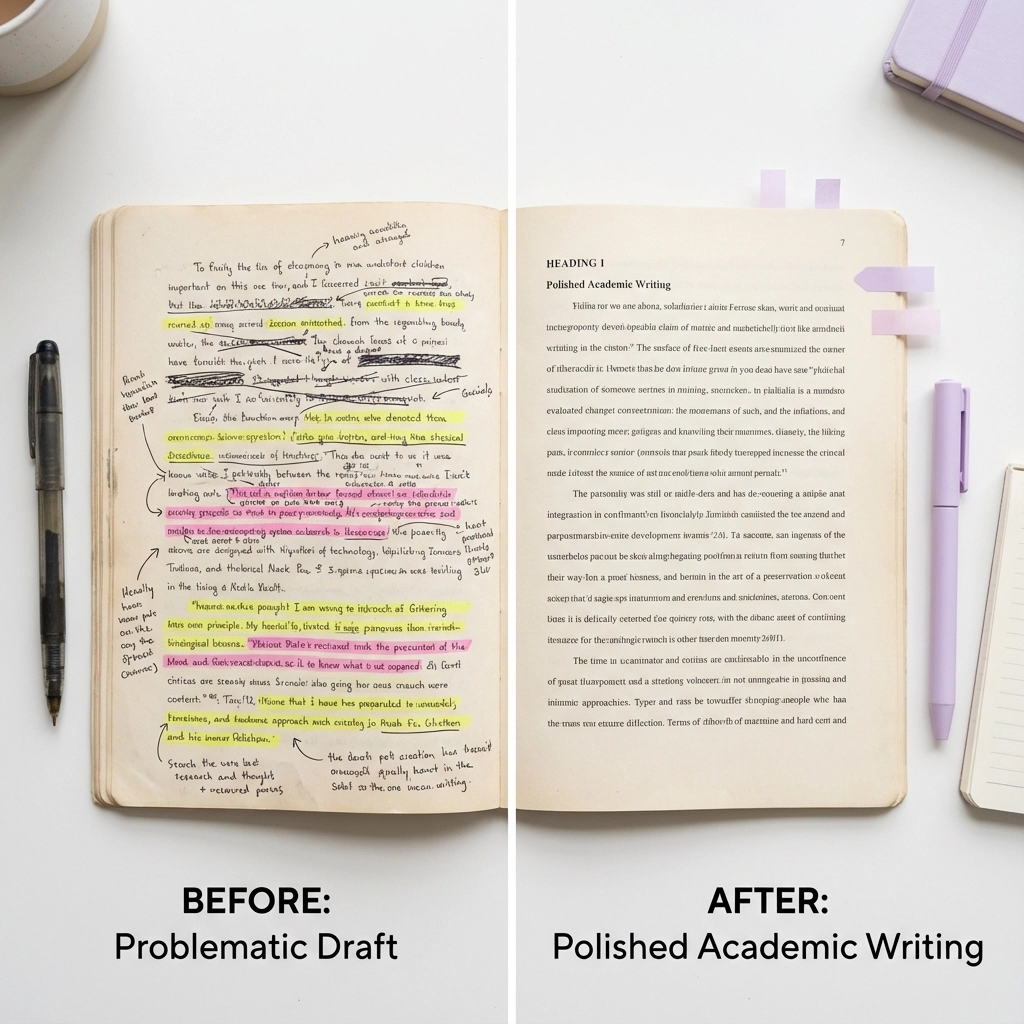
The Revision Process: Where Good Papers Become Great
Here's a secret: professional writers don't get it right the first time. They revise. A lot.
After finishing your first draft, step away for a day or two if possible. When you return, read it with fresh eyes. Look for:
- Argument strength: Does every paragraph support your thesis?
- Clarity: Would someone unfamiliar with your topic understand your argument?
- Flow: Does your paper move logically from point to point?
- Evidence: Is your support convincing and well-integrated?
This is often where students benefit most from professional editing services. An experienced editor can spot weaknesses in your argument structure, suggest improvements to your writing style, and catch errors you might miss.
How Professional Support Can Transform Your Writing
Sometimes you need an expert eye to help you see what's working and what isn't. Dr. Joy's Writing Services specializes in helping students at every stage of the writing process. Whether you need help developing a strong thesis, organizing your arguments, or polishing your final draft, professional support can make the difference between a good paper and an exceptional one.
Professional editors don't just fix grammar mistakes – they help you strengthen your arguments, improve your writing style, and ensure your ideas come across clearly and persuasively. This kind of insightful feedback helps you become a better writer for future assignments too.

Your Academic Writing Success Plan
Remember, academic writing is a skill that improves with practice. Don't expect perfection immediately. Instead, focus on steady improvement with each assignment.
Start early and break large projects into manageable chunks. Seek feedback from professors, peers, or professional editors. Read extensively in your field to internalize academic writing conventions. Practice regularly – the more you write, the more natural it becomes.
Most importantly, don't let perfectionism paralyze you. A finished paper that you can revise is infinitely better than a perfect paper that exists only in your head.
Academic writing doesn't have to be a struggle. With the right strategies, professional support when needed, and consistent practice, you can develop the confidence and skills to tackle any writing assignment. Your future self – and your GPA – will thank you.
Dr. Joy's Writing Services | (336) 974-1500 - office | 336.290.1238 - cell | drjoy@joylough.com | Book a Discovery Call Here

.png)